The domestic cat, that most paradoxical of creatures, maintains a delicate thermal balancing act that has fascinated biologists and puzzled pet owners for generations. Few animals exhibit such contradictory behaviors when it comes to temperature regulation as Felis catus, simultaneously seeking out scorching heat sources while remaining dangerously vulnerable to overheating. This thermoregulatory tightrope walk reveals much about the evolutionary history and physiological constraints of our feline companions.
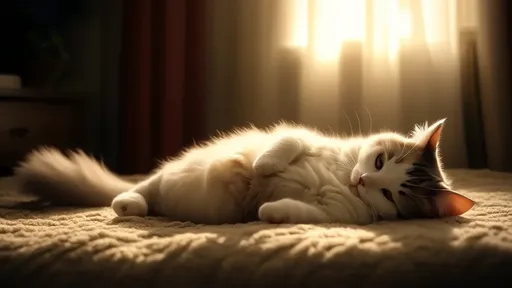
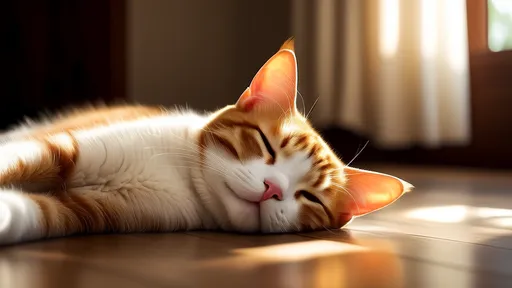
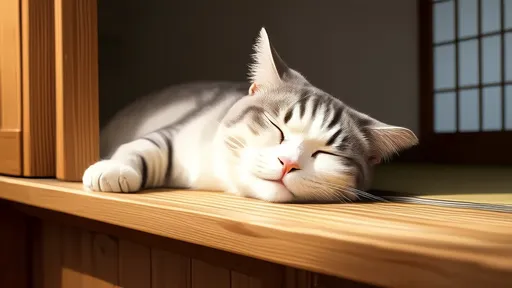
On any chilly morning, one might find a housecat stretched luxuriously before a roaring fireplace or pressed against a radiator, seemingly trying to absorb every joule of available warmth. The animal's apparent bliss in these situations suggests a creature perfectly adapted to bask in extreme heat. Yet this same cat, when exposed to moderately warm ambient temperatures that wouldn't trouble most mammals, can quickly descend into life-threatening heat stress. This feline thermoregulation paradox represents one of the most intriguing physiological quirks in the animal kingdom.
The roots of this contradiction lie deep in the evolutionary history of cats. Descended from desert-dwelling ancestors, modern domestic cats inherited several adaptations for conserving water and tolerating heat. Their original habitat provided abundant sunshine for basking but demanded excellent water conservation strategies. Unlike humans who sweat profusely when overheated, cats possess very few sweat glands - located primarily on their paw pads - making evaporative cooling far less effective. When environmental temperatures exceed their comfort zone, panting becomes their primary cooling mechanism, though this too proves inefficient compared to canine counterparts.
What makes the situation particularly curious is that while cats handle extreme directional heat (like that from a fire or heating pad) remarkably well, they struggle terribly with ambient heat. The explanation lies in their specialized heat detection and preference systems. A cat's face contains highly sensitive temperature receptors concentrated around the nose and mouth, allowing them to detect subtle warmth variations in their immediate environment. This helps them locate the perfect toasty spot while avoiding surfaces that might burn them. However, their overall thermoregulatory physiology lacks robust mechanisms for dealing with whole-body heat accumulation.
The thickness and insulating properties of a cat's fur further complicate their thermal situation. While their coat provides excellent protection against cold, it becomes a liability in warm conditions. Unlike some mammals that can dramatically alter their coat insulation seasonally, domestic cats show relatively modest seasonal variation in fur density. This means the same insulating layer that serves them well in winter becomes problematic in summer. The evolutionary trade-off between consistent protection and thermal flexibility leaves modern cats in something of a thermal compromise.
Behavioral adaptations play an equally important role in how cats manage their temperature paradox. The famous feline penchant for finding sunny patches and heat sources reflects an intelligent behavioral thermoregulation strategy. By selectively exposing themselves to intense directional heat, they can maintain core temperature while keeping the rest of their body relatively cool. This allows precise temperature control that their physiology alone cannot provide. Observant owners will notice that cats frequently alternate between heat sources and cooler areas, demonstrating an innate understanding of their own thermal limitations.
The risks of overheating in cats should not be underestimated. When ambient temperatures climb above 90°F (32°C), most cats begin experiencing heat stress. Unlike dogs that will typically stop exercising when overheated, cats often fail to recognize their own thermal limits until severe symptoms appear. Signs of heatstroke in cats can be subtle at first - increased respiratory rate, mild lethargy, or excessive grooming in an attempt to spread cooling saliva. As the condition progresses, symptoms escalate to drooling, bright red gums, vomiting, and eventually collapse. Unlike their desert-adapted ancestors, modern domestic cats have lost much of their natural heat tolerance through generations of living in climate-controlled environments.
Particularly vulnerable are brachycephalic (flat-faced) breeds like Persians, whose compromised respiratory systems make temperature regulation even more challenging. Elderly cats, kittens, and those with preexisting health conditions also face elevated risks. Even healthy adult cats can quickly succumb to heatstroke if trapped in warm environments without access to cooler areas. Car interiors, unventilated rooms, and even sunny windowsills can become dangerous heat traps during warm weather.
Responsible cat ownership requires understanding and accommodating this thermal paradox. Providing access to both warm and cool areas allows cats to regulate their temperature behaviorally as they would in nature. Heated beds should always be used with thermostats to prevent overheating, and multiple water sources should be available at all times. During heat waves, cooling mats or tiles can offer relief, and careful monitoring for signs of heat stress becomes essential. Never assume that because a cat seeks heat it cannot also overheat - this is the core of the feline thermoregulation paradox.
The evolutionary biologist Dr. Eleanor Whitmore, who has studied desert adaptation in felids, explains: "What we see in domestic cats is a fascinating case of evolutionary baggage. Their physiology remains optimized for an environment where intense directional heat was available for basking but where ambient temperatures rarely reached extremes. Modern living conditions have preserved their heat-seeking behaviors while removing many of the environmental checks that kept their ancestors safe from overheating."
This thermal regulation challenge may also explain several characteristic feline behaviors. Their famous crepuscular activity pattern - most active at dawn and dusk - likely represents an adaptation to avoid midday heat. The notorious feline preference for small, enclosed spaces may relate to thermal regulation as well, as these areas tend to maintain more stable temperatures. Even their famous dislike of water, while inconvenient for owners trying to cool them, may stem from an evolutionary strategy to conserve body heat in normally cool desert nights.
Recent research has uncovered another layer to this complex story. Studies at the Feline Thermoregulation Laboratory at Cambridge have demonstrated that domestic cats actually possess two distinct temperature preference ranges: one for ambient environmental temperature (around 86-97°F or 30-36°C) and another for surface contact temperature (preferring surfaces up to 126°F or 52°C). This dual-system approach allows them to maintain core temperature stability while enjoying much hotter local heat sources - a brilliant evolutionary compromise that nonetheless leaves them vulnerable to misunderstanding by human caretakers.
Understanding this delicate thermal balance becomes increasingly important as climate change makes heat waves more frequent and intense. Cat owners in traditionally temperate regions may find themselves unprepared for their pets' vulnerability to conditions they previously rarely encountered. Veterinary clinics report increasing cases of feline heatstroke in areas where such incidents were once rare, suggesting that our changing climate may be exacerbating this ancient evolutionary mismatch.
The feline thermoregulation paradox serves as a powerful reminder that evolution produces solutions tailored to specific environmental contexts. When those contexts change rapidly - whether through domestication, urbanization, or climate shifts - previously adaptive traits can become liabilities. Our domestic cats carry with them the thermal wisdom of their desert ancestors, leaving them simultaneously drawn to heat and endangered by it. In caring for these creatures, we must respect both sides of this ancient evolutionary coin, providing opportunities for blissful basking while vigilantly protecting them from overheating's invisible threat.
Perhaps this thermal tightrope helps explain why cats so fascinate us - they are creatures of exquisite balance in all things, masters of calculated risk who nonetheless depend on our understanding of their vulnerabilities. Their ability to find perfect warmth while avoiding thermal danger represents just one of the many elegant paradoxes that make the domestic cat such an endlessly interesting companion. As we better understand their unique physiological challenges, we become better stewards of their well-being in our shared, climate-changing world.

By /Jun 12, 2025
By /Jun 12, 2025
By /Jun 12, 2025
By /Jun 12, 2025

By /Jun 12, 2025
By /Jun 12, 2025
By /Jun 12, 2025
By /Jun 12, 2025

By /Jun 12, 2025
By /Jun 12, 2025
By /Jun 12, 2025
By /Jun 12, 2025
By /Jun 12, 2025
By /Jun 12, 2025
By /Jun 12, 2025
By /Jun 12, 2025
By /Jun 12, 2025