A Timeline for the Sensory Development of Newborn Kittens: Opening Eyes ≠ Seeing the World

Jun 12, 2025 By

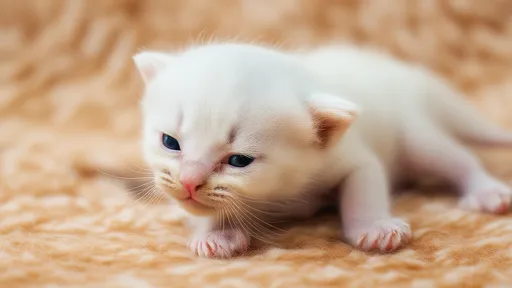
There’s something undeniably magical about newborn kittens—their tiny paws, delicate whiskers, and tightly shut eyes that seem to promise a world of wonder. Yet, what many don’t realize is that the moment a kitten’s eyes open, it doesn’t mean they’re suddenly seeing the world as we do. The journey from darkness to clarity is a gradual one, shaped by biology and time. Understanding this process not only deepens our appreciation for feline development but also helps us care for these vulnerable creatures with greater empathy.

When kittens are born, their eyelids are firmly sealed, a biological safeguard against potential infections and harsh light in their earliest days. This temporary blindness might seem like a disadvantage, but it’s a crucial part of their survival strategy. In the wild, newborn kittens rely entirely on their mother’s warmth, scent, and the vibrations of her purrs to navigate their first weeks. Their sealed eyes, far from being a limitation, allow them to focus energy on growth and bonding while shielded from environmental stressors.

Around the 7 to 14-day mark, most kittens begin to crack open their eyes, revealing hazy slits of blue-gray. This milestone often sends new pet owners into delighted excitement—but here’s the catch: open eyes don’t equal functional vision. The eyes may be physically open, but the neural pathways connecting them to the brain are still under construction. At this stage, kittens perceive little more than blurred shapes and light gradients, much like a camera struggling to focus through frosted glass.

The misconception that "open eyes = clear sight" can lead to unintentional human errors in kitten care. Well-meaning owners might assume their kitten is ready to explore brightly lit rooms or interact with complex stimuli, unaware that the sudden sensory overload could overwhelm their developing systems. Veterinarians often stress the importance of keeping newborn litters in dim, quiet environments during these early weeks, mimicking the sheltered darkness of a nest. This allows their visual cortex to mature at its own pace, free from unnecessary strain.

What’s fascinating is how kittens compensate for their limited vision during this transitional phase. Their sense of smell, fully operational at birth, becomes their primary navigation tool. A kitten can detect their mother’s mammary glands with pinpoint accuracy long before their eyes focus properly. Their whiskers, extraordinarily sensitive to air currents and spatial changes, act as a tactile radar system. These adaptations reveal nature’s brilliance—when one sense is under development, others rise to the occasion.

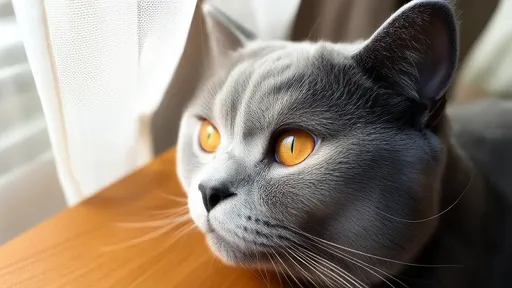
By week three, the world starts coming into softer focus. Kittens begin tracking movement, though their coordination remains comically unpolished. You might notice them pawing at shadows or misjudging distances during their first wobbly attempts at play. This period is critical for visual calibration—every stumble and overshot pounce helps their brain map spatial relationships. It’s also when their irises start revealing their eventual color, as melanin production kicks into gear, transforming those milky blue eyes into greens, ambers, or staying blue in certain breeds.

The fourth through eighth weeks mark the most dramatic improvements in visual acuity. Depth perception solidifies as their eyes shift from the babyish wide-set position to the forward-facing alignment of adult cats. This binocular vision is essential for judging leaps and calculating predatory strikes. Simultaneously, their pupils gain responsive control, adjusting to light changes with increasing precision. However, even at eight weeks—when many kittens join new homes—their vision still isn’t fully adult-level. Subtle refinements continue until around three to four months of age.

This developmental timeline carries profound implications for kitten socialization. The period between two to seven weeks—when vision is improving but not perfected—is the prime window for positive human exposure. Gentle handling during these weeks helps kittens associate human touch with safety, but it’s crucial to avoid sudden movements or visual chaos that could frighten their still-developing senses. Rescue organizations have found that kittens deprived of appropriate visual stimulation during this phase often grow into skittish adults, while those introduced to gradual, positive experiences become well-adjusted companions.

Modern imaging technology has allowed scientists to glimpse how kittens likely see during these transitional phases. Comparative studies suggest that a three-week-old kitten’s vision resembles severe human myopia, with details blurring beyond a few feet. Their color perception, initially limited to blues and yellows, gradually expands, though cats never develop the rich color spectrum humans enjoy. Instead, they excel in low-light detection and motion sensing—traits hardwired into their nocturnal hunting ancestry.

For breeders and foster caregivers, recognizing the disconnect between eye-opening and true sight can prevent common pitfalls. Overzealous introduction to toys or other pets too early may trigger stress responses. Similarly, assuming a kitten can navigate stairs or obstacles because their eyes are open risks injuries. The wisest approach is to let kittens set the pace, observing their reactions and providing soft, high-contrast items (like black-and-white stuffed toys) that align with their developing visual capabilities.

Perhaps the most beautiful lesson in kittens’ visual development is the reminder that growth cannot be rushed. In an era obsessed with instant results, these small creatures embody the truth that some processes demand patience. The weeks between their first squint into the light and their confident gaze as young cats mirror so many of life’s journeys—awkward, incremental, and ultimately triumphant. When we adjust our expectations to honor their natural timelines, we don’t just raise healthier kittens; we witness one of nature’s most tender marvels.
Recommend Posts
Pet

Do Mirror Neurons in Cats Really Understand Human Expressions?

By /Jun 12, 2025

For centuries, cats have been enigmatic companions to humans, their behaviors often shrouded in mystery. One of the most intriguing questions in feline science is whether cats truly understand human facial expressions. Recent studies on mirror neurons in cats have sparked a heated debate among researchers, pet owners, and animal behaviorists alike. Could our feline friends be more attuned to our emotions than we’ve ever imagined?
Pet

Why Do Cats Have Longer Telomeres Than Canines, Leading to a Significant Difference in Lifespan?

By /Jun 12, 2025

The question of why domestic cats exhibit a far greater range in lifespan compared to their canine counterparts has long intrigued scientists and pet owners alike. While both species share similar environments and often comparable care, the disparity in their aging patterns remains a puzzle. Recent research into telomere dynamics—the protective caps at the ends of chromosomes—has shed new light on this phenomenon, revealing fundamental differences in how cats and dogs age at the cellular level.
Pet

Feline Gut Microbiome: 90% Less Microbial Diversity Than Humans

By /Jun 12, 2025

The microbial world within a cat’s gut is a fascinating yet understudied frontier in veterinary science. Recent research has revealed that domestic cats possess a gut microbiome with significantly less diversity compared to humans—approximately 90% fewer microbial species. This stark difference raises important questions about feline digestion, health, and even the evolutionary adaptations that have shaped their unique internal ecosystems.
Pet

Feline False Pregnancy": How Hormones Deceive the Body?

By /Jun 12, 2025

In the quiet corners of a home where an unspayed female cat resides, an odd phenomenon sometimes unfolds. Weeks after her heat cycle, she begins exhibiting all the signs of motherhood—swollen belly, nesting behaviors, even milk production—yet there are no kittens. This bewildering condition, known as false pregnancy or pseudopregnancy, is a hormonal sleight of hand that has puzzled pet owners and fascinated scientists for decades.
Pet

The Hidden Function of Cat Whiskers: Nighttime Navigation as a Spatial Mapper"

By /Jun 12, 2025

In the quiet hours of the night, when most creatures rely on sight or sound to navigate, cats move with an uncanny precision that has long fascinated scientists. Their secret? Those seemingly ordinary whiskers. Far from just decorative facial features, a cat’s whiskers are sophisticated sensory tools that function as a biological "spatial mapper," allowing them to construct a detailed mental map of their surroundings—even in complete darkness.
Pet

Feline Salivary Enzymes: A Dual-Action Formula as Antibacterial Agents and Wound Healers

By /Jun 12, 2025

In the quiet corners of veterinary science, a fascinating discovery has been brewing—one that might change how we approach wound care and infection prevention. Researchers have turned their attention to an unlikely hero: the humble house cat. More specifically, they've been studying the enzymes found in feline saliva, which appear to possess remarkable antibacterial and wound-healing properties. This revelation isn't just academic curiosity; it could lead to groundbreaking dual-action medical formulations that tackle infections while accelerating tissue repair.
Pet

The Feline Voice Change": From Kitten Mews to Low Growls - Restructuring of the Vocal Cords

By /Jun 12, 2025

The melodious purr of a kitten and the guttural growl of a tomcat seem worlds apart, yet they originate from the same remarkable vocal apparatus. Feline vocalization undergoes a dramatic transformation from infancy to adulthood, a phenomenon that has long fascinated scientists and cat lovers alike. Recent research reveals this isn't just about growing louder or deeper - cats fundamentally restructure their vocal production techniques as they mature.
Pet

A Timeline for the Sensory Development of Newborn Kittens: Opening Eyes ≠ Seeing the World

By /Jun 12, 2025

There’s something undeniably magical about newborn kittens—their tiny paws, delicate whiskers, and tightly shut eyes that seem to promise a world of wonder. Yet, what many don’t realize is that the moment a kitten’s eyes open, it doesn’t mean they’re suddenly seeing the world as we do. The journey from darkness to clarity is a gradual one, shaped by biology and time. Understanding this process not only deepens our appreciation for feline development but also helps us care for these vulnerable creatures with greater empathy.
Pet

Induced Ovulation in Female Cats: An Evolutionary Strategy Triggered by Mating for Fertility

By /Jun 12, 2025

The feline reproductive strategy stands as one of nature's most fascinating biological adaptations. Unlike most mammals that ovulate spontaneously, domestic cats (Felis catus) and several other felid species have evolved an induced ovulation mechanism—where breeding activity itself triggers the release of eggs. This evolutionary quirk raises compelling questions about survival advantages, ecological pressures, and the intricate dance between physiology and behavior.
Pet

Feline Temporal-Spatial Cognition: Why Do Cats Always Perfectly Block the Door Waiting for You?

By /Jun 12, 2025

There’s something almost mystical about the way cats seem to materialize at the exact moment you walk through the door. Whether you’ve been gone for hours or just stepped out to take out the trash, your feline companion is often there, waiting with an air of quiet expectation. This uncanny timing isn’t just coincidence—it’s a fascinating interplay of feline senses, spatial awareness, and an almost eerie understanding of time.
Pet

How Does a Cat's Anticipatory Processor" Calculate Precise Landing Points?

By /Jun 12, 2025

The feline ability to land gracefully from dizzying heights has long fascinated scientists and cat lovers alike. Behind this seemingly effortless feat lies a sophisticated biological computer – the cerebellum – working overtime to calculate trajectories, adjust body position, and execute perfect landings. Recent neuroscience research reveals how this "predictive processor" in a cat's brain makes split-second computations that would challenge even advanced robotics.
Pet

Unique Setting of Cat Blood Sugar: Why Is Diabetes So Prevalent?

By /Jun 12, 2025

The rising incidence of diabetes in cats has become a growing concern among veterinarians and pet owners alike. Unlike humans or even dogs, felines have a unique metabolic system that makes them particularly susceptible to this condition. Understanding the biological and environmental factors behind this trend is crucial for prevention and management.
Pet

The Paradox of Feline Thermoregulation: Love for Fire and Fear of Heatstroke in a Delicate Balance

By /Jun 12, 2025

The domestic cat, that most paradoxical of creatures, maintains a delicate thermal balancing act that has fascinated biologists and puzzled pet owners for generations. Few animals exhibit such contradictory behaviors when it comes to temperature regulation as Felis catus, simultaneously seeking out scorching heat sources while remaining dangerously vulnerable to overheating. This thermoregulatory tightrope walk reveals much about the evolutionary history and physiological constraints of our feline companions.
Pet

Cats Cannot Synthesize Taurine: A Nutritional Deficiency Locked by Carnivorous Genes

By /Jun 12, 2025

The evolutionary path of domestic cats has led them to become obligate carnivores, a dietary specialization that comes with a critical biological trade-off: their inability to synthesize taurine, an essential amino acid. Unlike many other mammals, cats lack the enzymes required to produce taurine from precursor molecules, forcing them to rely entirely on animal-based sources for survival. This nutritional defect is not a random flaw but rather a consequence of their genetic adaptation to a meat-exclusive diet—a "lock" that ensured efficiency at the cost of metabolic flexibility.
Pet

The Enigmatic Heartbeat of Cats: Resting at 120 Beats vs Stressed at 240 Beats - Survival Tactics

By /Jun 12, 2025

The feline heart holds secrets that reveal remarkable evolutionary adaptations. When your house cat purrs contentedly in your lap, its heart beats at a leisurely 120 beats per minute - but that same organ can suddenly double its pace when danger strikes. This extraordinary cardiovascular flexibility isn't just biological trivia; it represents a sophisticated survival strategy refined over millions of years of evolution.
Pet

Feline Atavistic Phenomenon in the Larynx: Why Can't Leopards Purr While Domestic Cats Can?

By /Jun 12, 2025

The purring of a domestic cat and the mighty roar of a lion are two of the most iconic sounds in the animal kingdom. Yet, despite their evolutionary kinship, big cats like leopards cannot purr, while their smaller relatives, house cats, cannot roar. This fascinating divergence stems from deep-rooted anatomical differences in their vocal structures—a phenomenon tied to evolutionary ancestry and specialized adaptations.
Pet

The Cat's Nictitating Membrane (Third Eyelid): From Underwater Goggles to a Health Barometer

By /Jun 12, 2025

In the feline world, few anatomical features are as enigmatic as the nictitating membrane, commonly known as the third eyelid. This translucent or pale pink tissue, which sweeps horizontally across a cat’s eye, serves functions far beyond what meets the human eye. Often unnoticed by pet owners until it becomes prominent—a potential sign of illness—the third eyelid is a marvel of evolutionary adaptation. From acting as nature’s underwater goggles to serving as a silent health alarm, this structure is as functional as it is fascinating.